
My first experience of Chris Jones at full speed was in a crowded training room at Ealing Studios and stunned to silence by his assertion: ‘You are all filmmakers. Get on with it.’ I am instinctively cautious so naturally I did not, but the stone had been thrown. The advice and skills from Chris’s Filmmaking Programmes over the next few years helped build a foundation of confidence and rigour that I continue to use and reshape in my film work, so far culminating in my new feature length documentary ‘Frank Whittle: A Genius In The Family.’
My name is Nick Horrell. I produce documentaries, corporate films and support communications skills programmes as a training consultant. ‘Frank Whittle: A Genius In The Family’ is a 60-minute documentary about the inventor of the jet engine, and has recently been nominated for ‘Best Documentary Feature’ at the 2025 Love & Hope International Film Festival in Barcelona. It will receive its International Premiere there on Friday 3rd October (8.30pm at Cinema Maldà, Carrer del Pi, 5, Ciutat Vella, Barcelona: https://www.lhifilmfestival.com).
It will receive its UK Premiere on Friday 31st October at The RAF Club in Piccadilly, London, and will be followed by an online release.
Please take a look at the official website to find out more: www.frankwhittlegenius.com
As Chris would say, ‘Let’s get on with it.’
Start
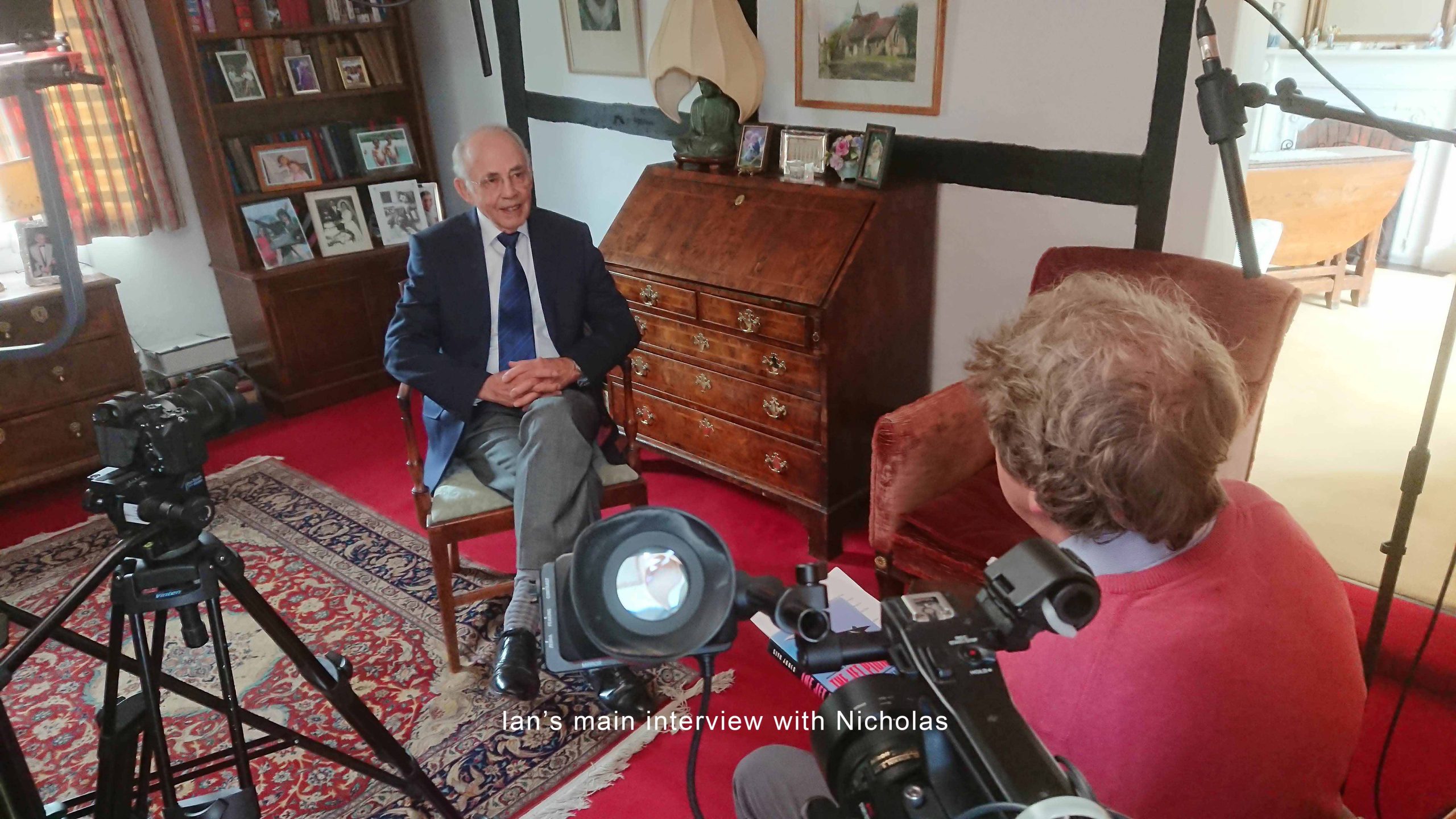
For me it began with a question: what is it like to have a genius in the family? I had seen a couple of films produced by documentary filmmaker Nicholas Jones about Sir Frank Whittle. Frank Whittle was a Royal Air Force pilot and engineer, and a mathematical genius. In the 1930s Whittle invented the jet engine in the face of huge opposition from the scientific community, big business and the government. His work came at a huge cost to his personal and mental health and his family life. I contacted Nicholas about the concept, and he introduced me to Frank Whittle’s younger son, Ian Whittle, who to my surprise rather liked the idea. Nicholas and myself agreed to become Co-Directors and so the film began.
Get to know your audience
I knew there was an audience for an aviation history documentary based on the response to the documentaries of my co-director Nicholas Jones. I also asked people, who I believed would be interested, what they thought of the idea and what sort of tone the film could take.
During production I continued taking an interest in the social media posts from those who are fascinated by history and aviation (i.e. commenting and liking their posts where appropriate) and eventually sharing the film website with them on social media.
In recent months as the film neared completion I have also used the Meta ads (formerly Facebook) facility. For me this meant creating a 10-day ad campaign targetting the USA (5-days) and the UK (5-days) to assess engagement with the documentary’s trailer. This cost around $170 and generated 18,500 views so I knew there was still an audience out there that would value seeing a documentary such as mine
Planning is not doing
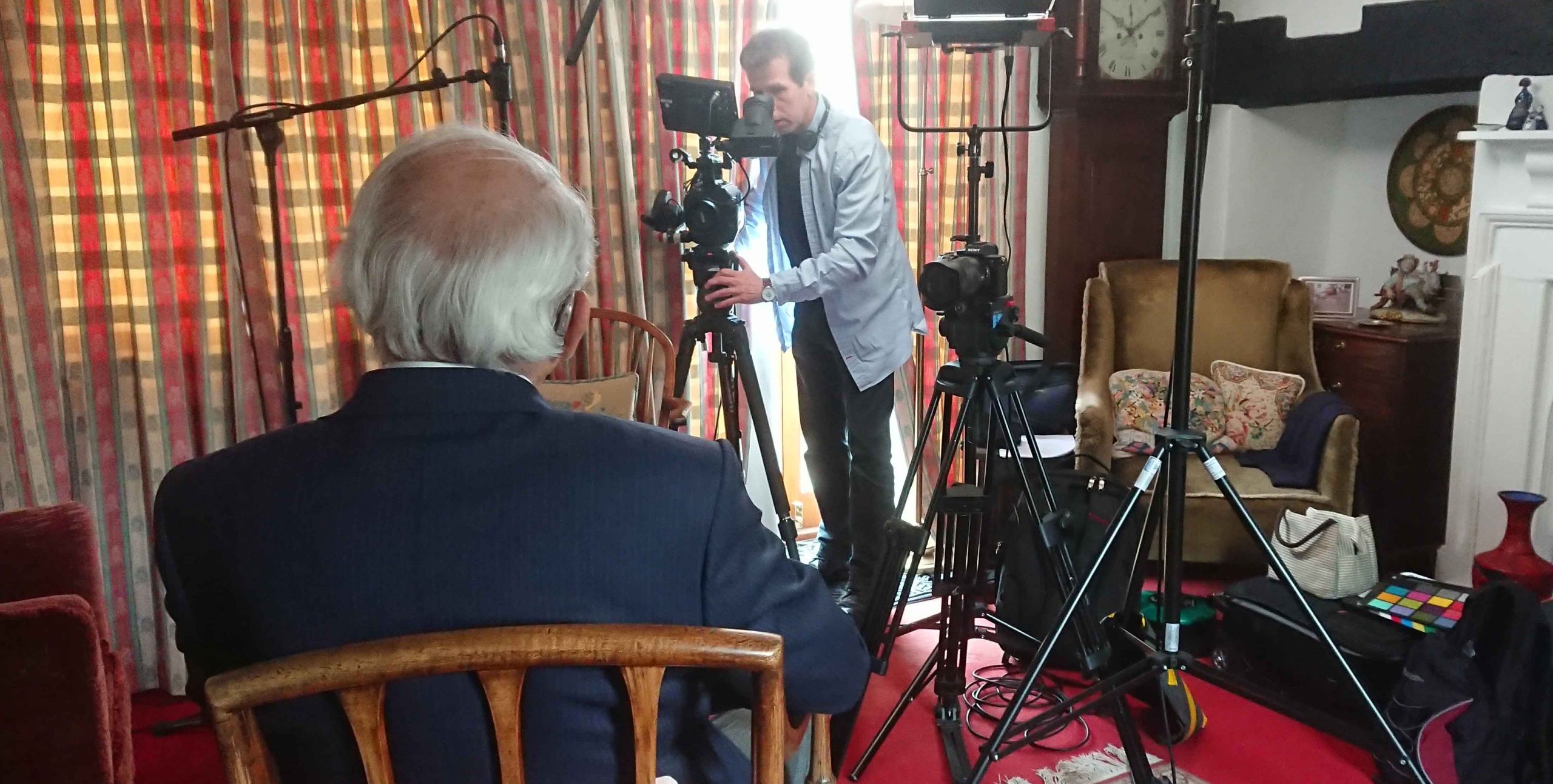
Planning is essential to a well run production and I consider it one of my strengths as a producer, but in the end I had to stop over-thinking things, pack the camera, travel to the location and ‘Get on with it.’ It’s the only way!
Recruit on-screen talent
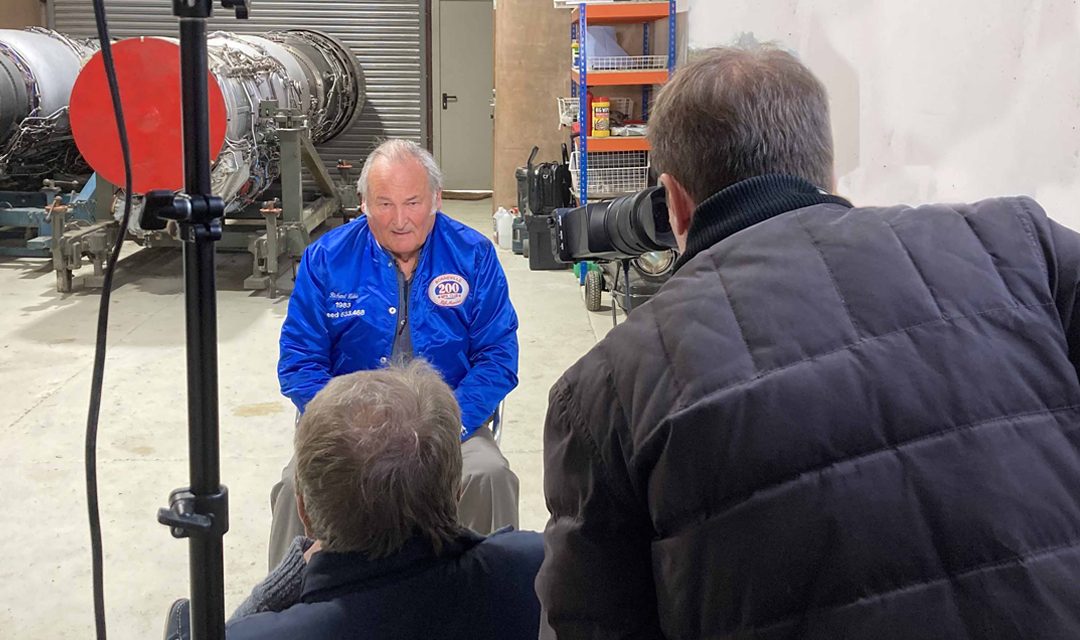
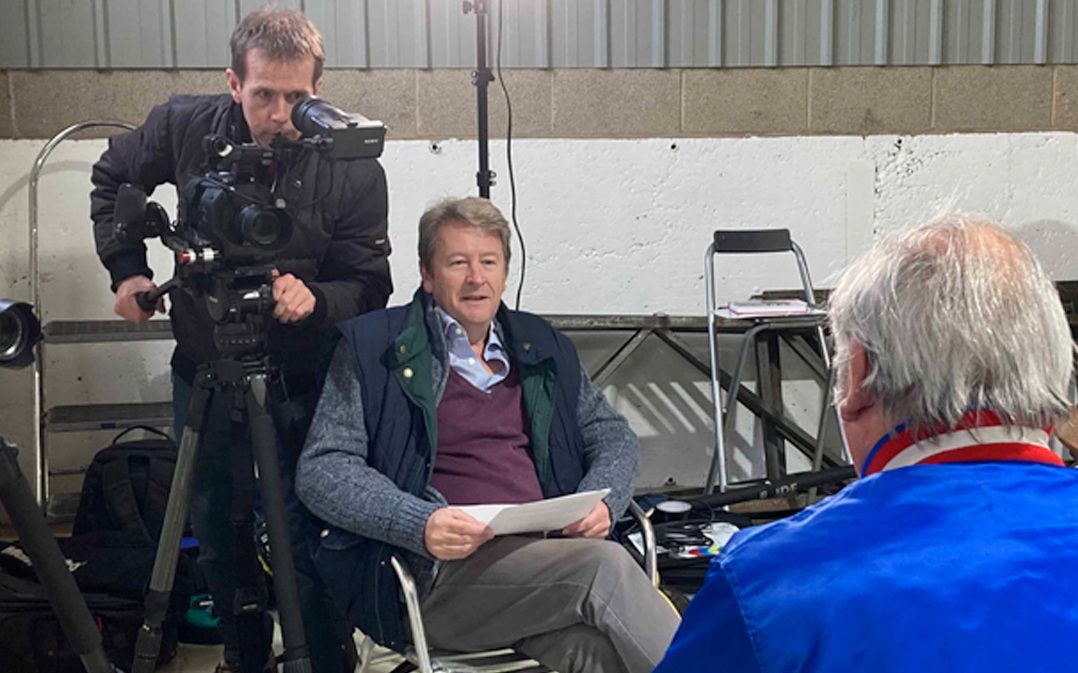
Although we had the amazing support of Ian Whittle (Frank Whittle’s younger son) I knew we also needed experts and commentators who could present key aspects of the story without it turning into homework. I wrote emails to countless people, closely followed by countless refusals. And then, against all the odds, an innovator and entrepreneur called Richard Noble said yes. Richard had become the Land Speed World Record Holder in 1984 by driving his jet car Thrust2 at more than 633 miles per hour across Black Rock Desert in the USA. I thought, ‘If I can reach Richard Noble who else can I reach?” Over the next 18 months four more contributors at the top of their game came on board:
- Dr Victoria Taylor: Aviation historian, writer and broadcaster;
- Professor Rob Miller: The Director of The Whittle Laboratory at Cambridge University;
- Max Asseily: Aerospace engineer and great grandson of Frank Whittle;
- Kerissa Khan: President of The Royal Aeronautical Society (2023-2024).
Find the money somehow
We spent almost a year approaching broadcasters and distributors with the idea of hoping to gain some financial backing. We received some encouraging words of support but no hard cash. What I did remember Chris explaining was that there is no single or simple way of raising money. So with no external funder on board, I worked hard (I run a production company that makes brand films and provides communications skills training) and largely funded the documentary myself. This took a lot of time, depleting my own savings, but had to be done.
Do as much yourself
I had to embrace this piece of advice very quickly. Archive film footage in particular is often immensely expensive – some archive libraries charge up to £50 per second to license material.
These are some of the main areas where money was spent:
- Archive video footage licensing
- Archive still images licensing
- Music licensing
- Animation
- Legal/Contracts
- Accountancy
- Travel and accommodation
- Film Crews
Where I was able to do things myself I did:
- Editing – I am an experienced film editor with my own edit suite
- Camera hire – I am an experienced camera operator and have most of my own kit
- Music – although I licensed two tracks, I can write and produce music so most of the music in the documentary is composed and produced by me
- Voice over – I am a trained voice over artist (in my early career I worked as a reporter for BBC TV and Radio) so I did my own voice recordings
- Writing – along with Nicholas we co-wrote the script ourselves
- Sourcing additional archive footage from previous work by Nicholas
- Marketing including Facebook, Instagram, LinkedIn, YouTube and creating the official film website
Write things down
This is one of the most important pieces of Chris’s advice. Creating simple easy to understand contracts between the production company and contributors kept things transparent and acted as a clear presentation of what had been agreed if there was ever a misunderstanding. I did this with all of my contributors.
Where it also became important was when we agreed that I take over as the sole producer. In any production times change, people change, and sometimes people want to go in different directions often for very reasonable reasons. When it was time for me to take over as the sole producer I hired a media lawyer to update the agreement and this was all agreed, witnessed and signed in a matter of days.
Create a trailer as soon as possible
As a film editor as well as producer, this forced me into meticulously working out the essence of the story we were trying to tell. It would provide potential investors and broadcasters with something to see. When approaching contributors it would provide them with evidence that the production was professional and underway. And it would also prove to be an important guide whenever the amount of footage became overwhelming – to look back on the trailer and say, ‘How is this new footage helping tell this story? If it didn’t then I had to be ruthless and cut it out. This also helped improve planning because it forced a way of thinking about precisely what was needed from each particular location and contributor. As more footage was gradually produced then I simultaneously updated the trailer.
Distribution is hard
Completely true! I have found the world of distribution has changed profoundly from when I started this film to where I am now. I spent a lot of time trying to secure a traditional distribution deal without much success.
However, I came across an online organisation called Filmhub: https://filmhub.com. I am curently still researching the possibility of submitting to Filmhub but this is what I have learned so far:
- Filmhub will try to place a film or series with as many platforms as possible that fit with the genre of your film.
- It is currently free to use with various additional benefits via subscriptions.
- If a film is successfully placed with a platform, Filmhub currently takes a 20-percent share of any revenue streams and the filmmaker receives the remaining 80-percent.
- The quality control criteria prior to being accepted as a ‘Filmhub Film’ is strict (quite rightly ensuring high production values) and potentially time consuming.
- A lot of the marketing still needs to be done by yourself to help raise awareness of the film with the audience.
Also, bear in mind that the so-called democratisation of filmmaking through affordable cameras, lenses and editing has in turn meant many more films are out there so competition is tough. However, in my view Filmhub, along with now emerging similar organisations, is a good start and a model which I believe will continue to grow.
Have a reason for approaching film festivals
I wanted to find an international audience for the documentary as Frank Whittle is a person of international scientific importance, and I believed film festivals could help. I also wanted to review the production values that a big screen venue can provide as well as networking with fellow filmmakers and potential future collaborators.
I set myself a target for the number of film festivals I would apply to (10) and the amount of money I would spend on entrance fees (£400). I used Film Freeway and took out a small monthly subscription (£11.99) to become a ‘Gold Member’ which helps reduce entry fee costs and easily repays itself if you are entering more than five film festivals.
To raise awareness I also paid a small one-off fee for my email and documentary project page to be shared in the Film Freeway newsletter that goes out to film festival organisers. As a result about 120 film festivals approached me directly with discounts. I made a shortlist of those that offered good value for money and also met my three point criteria:
- The film festival had to have been running for at least 3 years and was actively seeking new documentary features for an international audience.
- I avoided all film festivals with the word ‘Awards’ in its title or gave a long list of awards to filmmakers.
- Each film festival I submitted to had to have recent years images on their Film Freeway site showing an audience watching films in a real cinema (not just a small group of people sat in a bar with a TV)
I also made a note of the names of those people who reviewed the film festival I was interested in and searched online to see if they were genuine filmmakers and had some kind of profile (e.g. on LinkedIn and/or IMDb).
Here are two links that I found helpful when trying to make the most of the film festival circuit on a budget and steer clear of scams:
- How to achieve discounted entry fees presented by Snail Productions: https://www.youtube.com/watch?v=mKUcmjdOUao
- How to spot the scams presented by Sergiy Pudich: https://www.youtube.com/watch?v=ktguOyN560c
Create a film website
For me creating an official film website gave the project an online anchor, the one place where everything about the film could be presented and shared. I had never thought myself capable of creating a website but I took a chance. There are quite a few subscription website building packages out there. I chose Squarespace. I gave a lot of thought to the name of the website. I wanted it to be memorable, defined the film, and easily found. I chose: www.frankwhittlegenius.com
Submit to IMDb
An IMDb page adds credibility to your film. It also allows for independent reviews of your film to be published on your IMDb page. Official selection in a film festival, a trailer and an official film website are three ways of helping support your IMDb submission. Virtually every major film in the World has an IMDb page. It is free to submit an IMDb application but the subscription Pro version does have added benefits (particularly for actors).
Here is my film’s IMDb page: https://www.imdb.com/title/tt35306547/
Here is a useful IMDb submission tutorial: https://www.youtube.com/watch?v=FSB_mlSICOA
Kit
Production
- Cameras – Sony FS7 was the main camera with the Sony A7III for B-roll. FS7 footage filmed at 4K (17:9) XAVC-I. Footage from the Sony A7III at UHD 16:9. I also used a GoPro as an additional camera for the flying shots in the cockpit of Ian Whittle’s aircraft.
- Lenses – Nikon 50mm (F1.8) adapted for E-mount for all interviews on the Sony FS7. Nikon 20mm (F1.8) adapted for E-mount for in-flight cockpit interiors. Sony 24-70mm (F4) and 24-240mm (F3.5 – F6.3) on the Sony A7III for B-roll.
- Audio – Sennheiser 416 for interviews, occasionally with Sony ECM88B as lavalier backup mic
- Lights – SWIT panel lights
- Tripod – Miller DS20
Post-Production
- Premiere Pro on a 2021 iMac – Film Convert plugin for grading of interviews.
- Some additional colour grading in DaVinci Resolve together with some sound isolation work.
- HD timeline with 4K and UHD footage rescaled – one of the main advantages of filming at such a high resolution is the ability to reframe without any noticable loss of quality.
Voice Over
- Gemini SE valve microphone with de-popper recorded/post-produced in Logic Pro X.
INSPIRING FILMMAKERS
Chris advised that in the most difficult times to watch and read those who inspire you. Making a feature documentary is one of the hardest things I have ever done and maintaining energy and enthusiasm over such a long period is tough – it has taken more than 4 years to reach this stage. These are my inspirations:
- Beau Travail directed by Claire Denis – feature film (https://www.youtube.com/watch?v=v-JFDmKsOCY)
- Orlando directed by Sally Potter – feature film (https://www.youtube.com/watch?v=ND22EWsxRZI)
- Murder Ball directed by Henry Alex Rubin and Dana Adam Shapiro – documentary
- (https://www.youtube.com/watch?v=AmvXbrrOAkU
- After Life directed by Hirokazu Kore-eda – feature film (https://www.youtube.com/watch?v=f8K_YxtdzRo)
- Driving Me Crazy directed by Nicholas Broomfield – documentary
(https://www.youtube.com/watch?v=aBWB7mUyjEQ)
Additional filmmakers I have found inspiring and incredibly helpful for advice and insights:
- Kelsey Brannan: Editing and Post Production – https://www.youtube.com/@PremiereGal
- Mark Bone: Documentary Filmmaker – https://www.youtube.com/@markbone
- Jason Horton: Filmmaker and influencer – https://www.youtube.com/watch?v=Ib664oYkC6g
Have your next project ready
Chris taught me to commit to a life of filmmaking rather than just make a one-off, so I am now deep into the planning of two more exciting documentaries.
Thank you
If you have read this far, thank you so much. I value your attention and wish you well with your filmmaking. To recap:
- ‘Frank Whittle: A Genius In The Family’ will receive its international premiere on Friday 3rd October 2025 at The Love & Hope International Film Festival in Barcelona (8.30pm at Cinema Maldà, Carrer del Pi, 5, Ciutat Vella, Barcelona).
- It will receive its UK Premiere on Friday 31st October at The RAF Club in Piccadilly, London. This will be followed by an online release: www.frankwhittlegenius.com
It is a privilege to be a filmmaker and to have found guidance and support from talented and experienced people such as Chris Jones. The story continues. Time to get on with it!
Nick Horrell
Producer/Director.
NH Communications Ltd.
W: www.frankwhittlegenius.com
Related Posts:
 12 ways to rewrite your British written spec script so it sells in Hollywood
 One Create50 horror story of how a writer lost their script… completely
 George Romero dies and we lose a legend… Watch the Making Of The Classic ‘Dawn Of The Dead’
 Episode two of our Xmas web series goes live with 20k views!
 Announcing The Successfully Selected Writers and Stories for Twisted: Ghosts of Christmas
 Tomorrow… Screenwriting Immersion Begins Online at LondonSWF365